Introduction
Running a school, college, or educational institution in today’s fast-paced digital era involves balancing complex administrative workflows—from processing admissions and tracking daily attendance to managing fee structures and coordinating parent-teacher communications. When managed manually using paper registers or fragmented spreadsheets, these processes lead to administrative bottlenecks, human errors, and wasted operational hours.
School Enterprise Resource Planning (ERP) software is an all-in-one digital management platform designed to centralize, automate, and streamline daily operational tasks across academic, administrative, and financial departments. By integrating all stakeholders—administrators, teachers, students, and parents—into a unified system, a School ERP transforms traditional paper-heavy administration into an efficient, real-time digital ecosystem.
1. What Is a School ERP?
A School ERP acts as an integrated digital nervous system for educational institutions. Unlike standalone tools (such as a separate fee register or an independent attendance app), an ERP connects all departments in real time. When a student pays fees online, the finance ledger updates instantly, a receipt notification is sent to the parent, and daily revenue reports adjust automatically without manual reconciliation.
2. Why Efficient School Management & Single-Person Control Matter
In a traditional setup, tracking day-to-day operations requires constant back-and-forth between multiple department heads—principal, account section, examination cell, and academic supervisors. This decentralized flow makes oversight slow and prone to oversights.
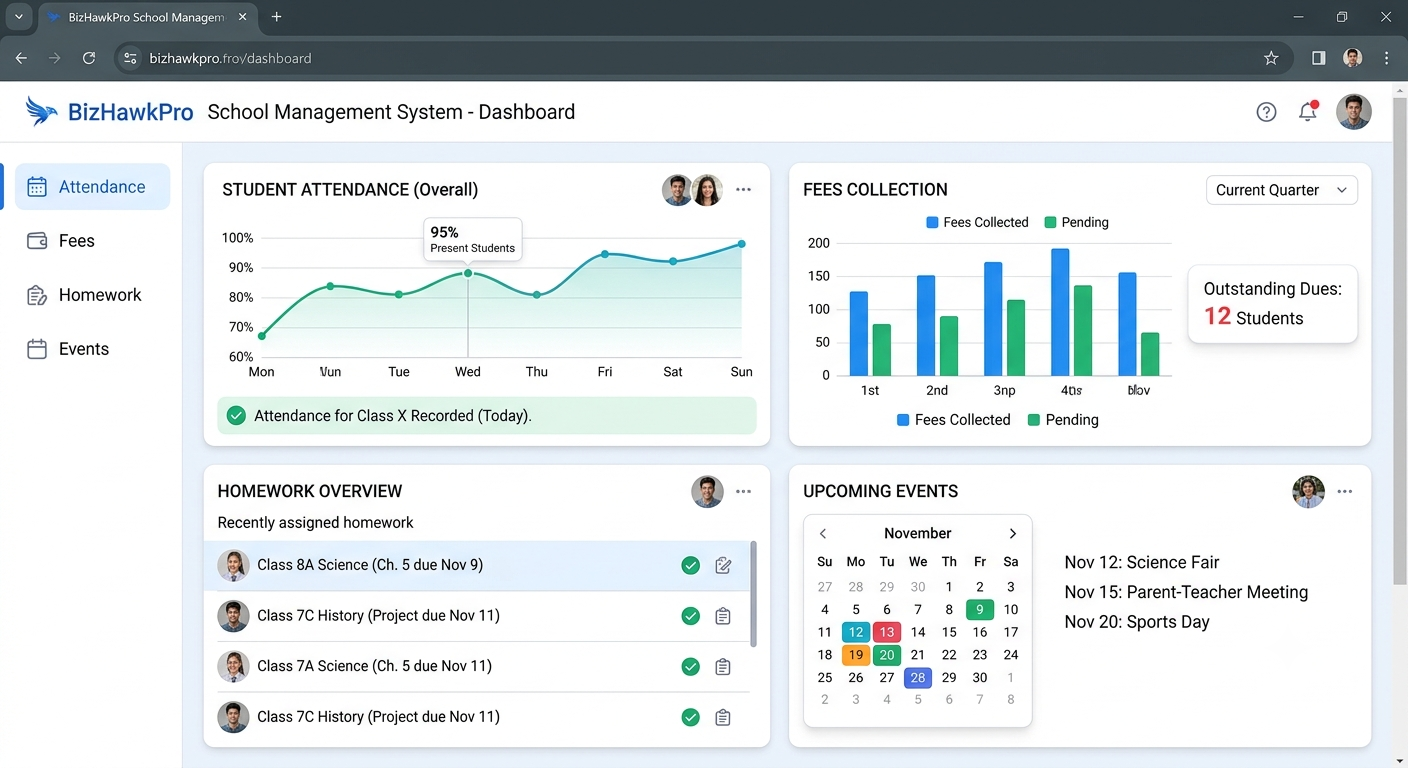
An efficient ERP system introduces a Single-Window Master Dashboard, empowering a single administrator or school director to track simultaneous activities occurring across the entire campus in real time:
- 360-Degree Real-Time Visibility: Monitor live student attendance, staff check-ins, fee collections, and active classroom activities simultaneously without stepping out of the office.
- Staff & Student Performance Tracking: Evaluate individual student academic growth and monitor teacher productivity, class coverage, and attendance patterns from centralized analytics charts.
- Syllabus Completion Monitoring: Track subject-wise and class-wise syllabus progress live. Administrators can instantly identify subjects lagging behind schedule and intervene before term exams.
- Upcoming Events & Examination Oversight: Maintain seamless oversight of upcoming unit tests, board examinations, sports days, parent-teacher meetings, and holiday schedules using an integrated master calendar.
- Proactive Decision Making: Instant notifications highlight administrative bottlenecks—such as pending fee dues, unassigned substitute teachers, or low student attendance—allowing prompt corrective action.
Bridging the Home-School Gap: Ensuring Child Safety & Parental Peace of Mind
For parents, rendering full attention to their child's physical safety and academic growth is top priority. However, without a real-time tracking mechanism, parents often feel anxious and disconnected from daily campus life. A modern School ERP platform bridges this critical gap by turning passive monitoring into active, collaborative care:
- Real-Time Safety & Transport Tracking: Instant push notifications when students board school buses, enter campus, or are marked absent during morning roll call, backed by live GPS fleet tracking.
- Continuous Academic Transparency: Parents get instant access to daily homework tasks, exam timetables, quiz results, and subject-wise progress analytics long before final report cards are issued.
- Health & Discipline Logs: Digital records of infirmary visits, physical health metrics, extra-curricular participation, and behavioral updates keep parents fully informed about overall child well-being.
- Direct Parent-Teacher Gateway: Seamless, secure communication channels allow parents to address learning difficulties or personal concerns with teachers promptly.
3. Core Modules of a Modern School ERP
Implementing an integrated management system shifts school administration from reactive firefighting to strategic governance. Here are the primary operational modules:
- Student Information System (SIS) & Admissions: Manage prospective student inquiries, digital registrations, and entrance tests online. Store complete student profiles, emergency contact data, health logs, and document histories in a secure, central database.
- Automated Fee & Account Management: Streamline fee structure assignment across classes and categories, generate digital receipts instantly, track pending dues, send automated payment reminders to parents, and reconcile accounts cleanly.
- Real-Time Attendance & Leave Management: Record daily student and staff attendance digitally via web portals, mobile apps, or integrated RFID/biometric hardware, providing immediate visibility to administrators and triggering instant absentee alerts to parents.
- Academic Records, Gradebooks & Examinations: Simplify report card creation, track continuous assessment scores, calculate GPAs/ranks automatically, and archive multi-year academic transcripts effortlessly.
- Timetable & Substitution Scheduling: Create conflict-free master schedules, prevent room double-booking, and assign substitute teachers instantly when staff members apply for leave.
- Seamless Parent-Teacher Portal: Bridge the home-school gap through dedicated mobile apps or web portals for homework updates, circulars, exam schedules, and direct messaging.
- Library & Transport Operations: Track book issue/return lifecycles via barcodes, manage library inventories, assign bus routes, and monitor student transportation logs efficiently.
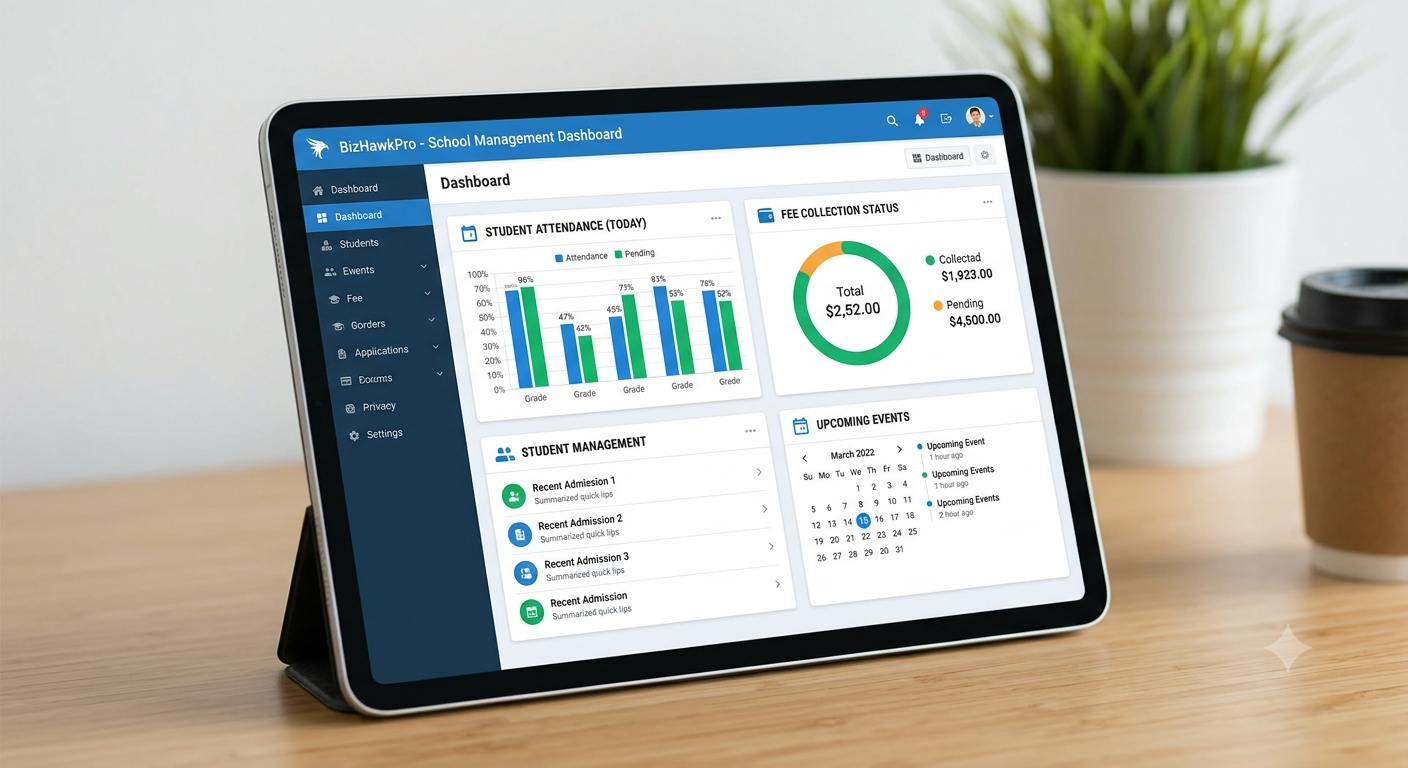
Real-time mobile connectivity for parents, teachers, and administrators.
4. Benefits Across Stakeholders
A central ERP system delivers customized value to everyone across the campus community:
- School Management & Owners: Gain complete visibility into financial cash flows, eliminate paperwork clutter, enhance institutional reputation, and make data-driven decisions.
- Teachers: Dramatically reduce administrative hours spent on manual roll calls and register entries, automate report card generation, and streamline assignment collection.
- Parents: Enjoy total transparency regarding child attendance and safety, receive instant fee due reminders, and track academic progress directly via mobile devices.
- Students: Access learning resources, view daily homework tasks, track exam schedules, and monitor attendance records transparently.
5. Why Moving Away from Manual & Legacy Systems Matters
Manual record-keeping and legacy desktop tools consume hundreds of staff hours every term and expose the institution to several risks:
- Data Silos: Standalone fee apps don't sync with attendance registers, leading to frequent financial and administrative reconciliation errors.
- Security Risks: Physical registers and unencrypted spreadsheets are vulnerable to loss, damage, and unauthorized access.
- Communication Gaps: Important notices printed on paper frequently fail to reach parents on time.
- Operational Inefficiency: ERP platforms eliminate redundant data entry, cut paper costs by up to 80%, and empower leadership with real-time analytics.
6. How to Choose the Right School ERP
When selecting management software for your institution, ensure it meets these key criteria:
- Cloud Accessibility & Hybrid Support: Cloud-hosted or self-hosted deployment options so staff can work securely from anywhere.
- Role-Based Access Control (RBAC): Granular security permissions to protect sensitive student, academic, and financial records.
- Intuitive UI: A simple, responsive interface designed for staff members of varying technical capabilities.
- Local Technical Support: Responsive support and quick assistance during high-volume periods like admissions and final exams.
Conclusion
A robust School ERP system is no longer just a technical upgrade—it is an essential foundation for operational excellence in modern education. By automating routine administrative and academic tasks, schools free up valuable time and resources to focus on what matters most: delivering high-quality learning experiences.
Readers' Comments & Discussion
We would love to hear your thoughts! Share your experiences, suggestions, or questions about School ERP software.
Share Your Thoughts
What Readers Are Saying
0 CommentsLoading comments...